Research
Waisman Lab uses human pluripotent stem cell-derived cardiomyocytes as a model system to ask two connected questions: how do these cells mature, and how does maturation relate to their ability to proliferate? Cardiac differentiation is the experimental foundation for both lines of work below.
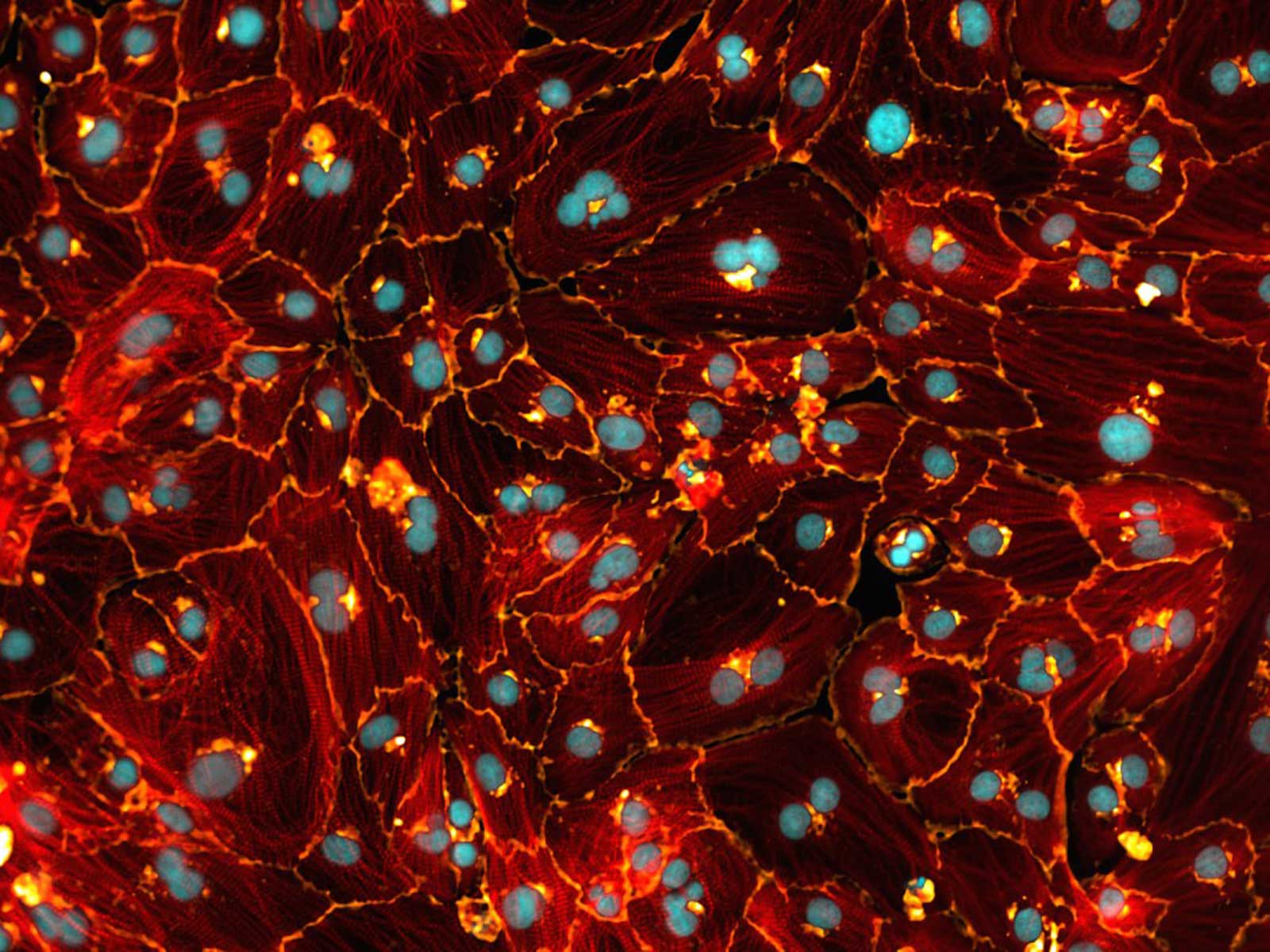
Cardiomyocyte Maturation
A major focus of the lab is understanding how stem cell-derived cardiomyocytes progress from an immature, fetal-like state toward the structural, metabolic, molecular, and functional properties of more mature cardiomyocytes. We use this process as a framework for asking which features of maturation are coupled to one another, which can be driven independently, and how maturation state relates to the cell's later proliferative capacity.
- Structural maturation
- Metabolic maturation
- Functional maturation
- Molecular maturation
- Cellular heterogeneity
Cardiomyocyte Proliferation & Regeneration
As cardiomyocytes mature, they largely lose the ability to divide, a central barrier to human heart regeneration. The lab studies the relationship between maturation state and proliferative competence, with the goal of understanding whether and how mature human cardiomyocytes can be induced to re-enter the cell cycle. Part of this work involves carefully distinguishing genuine cardiomyocyte division from alternative outcomes such as multinucleation or polyploidization, which can resemble proliferation but do not increase cell number.